John Boyega: The new face of Star Wars

Standard

By Ian Sherr

John Boyega hadn‘t been born when “Star Wars,“ with its cast of relative unknowns, electrified pop culture. The trilogy forever transformed sci-fi filmmaking and made Harrison Ford, Mark Hamill and Carrie Fisher household names.

Nearly 40 years later, the relatively unknown Boyega is poised to repeat history. The 23-year-old actor was tapped by “Star Wars“ director J.J. Abrams to help kick-start the next installment of the franchise, “Star Wars VII: The Force Awakens.“

“Sci-fi over the years has had a way of commenting on social issues, but without being preachy,“ says Boyega, who plays a character named Finn in the movie, set to be released in December. “ ‘Star Wars‘ was built on mythical stories, spirituality and also the classic good-versus-evil. But also, for me, is the understanding of human beings…I just love the human commentary.“

You‘d be forgiven if you‘re not familiar with Boyega. He‘s best-known for his role as Moses in the British comedy “Attack the Block,“ about teens who defend their London neighborhood against alien invaders. The low-budget (estimated at $13 million) movie is worlds apart from the marketing windup and excitement surrounding the new “Star Wars“ film.

The son of Nigerian immigrants who relocated to the United Kingdom before he was born, Boyega isn‘t yet comfortable talking about himself, saying he‘s unsure about allowing the world to peer into his life. What he will say is that he likes to work out, play video games and collect action figures, which he features in posts on his Instagram photo-sharing account. He also cherishes an orange-and-black-striped cat he got after “Star Wars“ finished filming last year. The cat‘s name: Oluwalogan, which includes the word for God in Nigeria‘s Yoruba language.

Boyega is even more secretive about his role in “Star Wars VII.“ He was the first character fans saw in Walt Disney‘s initial movie trailer, released last November.

In the clip, he‘s wearing Stormtrooper armor, sans helmet, and is on the run. Later, Disney released the film‘s promotional poster featuring him holding a lightsaber, the saga‘s iconic weapon.

What he will say about the movie is that Finn is on a journey, much like the origin stories of gods and superheroes from other mythologies. “All the characters we love — Batman, Spider-Man — never ever start off as those guys,“ Boyega says in his rich British accent.

His casting has sparked controversy. Last year, some Twitter users questioned Disney‘s decision to show a black man in the iconic white military garb. Boyega‘s response: “Get used to it.”

Now, some are threatening to boycott a movie with a black man in a lead role.

Boyega says he thinks about the impact of his role, but it doesn‘t consume him. When “you‘re a working actor, and they tell you you‘ve got an audition for a movie, diversity isn‘t the first thing you think about.”
For Disney’s Infinity, it really is a small world after all

Standard

By Ian Sherr

Darth Maul is ready to strike.

The villainous Sith Lord — who predates Darth Vader in the “Star Wars“ chronology —twists like a coiled spring, his black tunic whipping from the motion. He holds a double-bladed lightsaber behind him, ready to slash the deadly weapon at whoever comes near. Maul is a fearsome sight: Red and yellow eyes glare from a red face embellished with black tattoos. Eight small horns sprout from his head.

Fortunately, he‘s only 4 inches tall and made of 3 ounces of molded plastic.

The figurine alone is enough to grab fans‘ attention. But under Darth Maul‘s sand-colored base is a computer chip. Place him on a pad in front of a video game console and — presto— lights flash, sparks fly and the plastic action figure is transformed into a digital character in a video game, ready to set off on an adventure inside the screen.

As kids, most of us imagined a world where the toys we played with on our living room floor came to life. The Walt Disney Co. is edging closer to that fantasy — animating toys to make it seem like they‘re playing with us.

It‘s all part of Disney‘s ambitious effort to capitalize on its pantheon of characters, which includes Mickey Mouse, Iron Man and Princess Leia; grab kids‘ attention (along with their parents‘ wallets); and, in the process, reshape the $18 billion US toy industry. That goal hinges on a game called “Disney Infinity.“ Part collectible figurines, part video game, Infinity gives kids the freedom to dream up their own storylines, create new worlds and fill them with the Disney characters they want.

If Infinity‘s developers have their way, every toy Disney sells could step inside a game-generated world that we build with our imaginations.

“Toys in the future will not be like the ones you and I grew up with,” says John Vignocchi, who heads production for Disney Interactive. “This is the future of toys.”

It’s alive!

Toys have been around for as long as humans have been able to pick up sticks.

Archaeologists found toys in Egyptian pyramids, among ancient Greek artifacts and even buried alongside 5,000-year-old ruins in the Indus Valley, near the borders of modern day India, Pakistan and Afghanistan.

Today‘s mass-market toys chart their history to Hasbro, which started producing plastic toys during World War II and soon offered doctor and nurse kits for kids. In 1952, Hasbro launched its first hit: Mr. Potato Head. The first toy advertised on television, Mr. Potato Head came with interchangeable ears, eyes, shoes, noses and mouths. Mattel introduced Barbie seven years later; Ken showed up as her love interest in 1961.

The millennial generation had Teddy Ruxpin, an animatronic bear whose mouth and eyes moved while “reading“ stories from a cassette tape stored in its back.

Nowadays, toy makers are looking beyond those simple technologies.

Activision created the “toys to life“ game genre in 2011 when it launched Skylanders. As with “Disney Infinity,“ Skylanders‘ toys appear on the screen when placed on a special pad connected to a video game console or tablet. Nintendo and Lego sell their own toys-to-life games, too.

In March, Mattel unveiled the $75 Hello Barbie doll, which uses Siri-like voice recognition technology to listen to and interact with its owner.

Meanwhile, Hasbro and Disney together created Playmation, a $120 setup where kids strap on a glove that, using motion sensors, infrared technology and Bluetooth wireless communications, can “shoot“ at toy action figures. The glove vibrates when the toys shoot back.

The reason for all this technical wizardry? Today‘s kids expect it, thanks to their constant exposure to smartphones and tablets. “Now that they‘re used to that high level of interactivity, they will want to get it from their toys,“ says Lior Akavia, CEO of Seebo, which helps toy makers build smarts into their toys.

Video game console maker Ouya is in negotiations to sell itself, possibly to Razer

Standard

By Ian Sherr

Ouya, the startup video game console that became a darling of the independent development world, is in negotiations to sell itself.

The company is in talks with Razer, the computer and accessories maker popular with gamers. The deal is not yet finalized, a person familiar with the matter has said, but the companies are discussing ways to bring Ouya’s staff onboard.

The possible sale marks a dramatic turn for Ouya, a once-high flying startup, whose video game console and app store were popular with small developers. While the company and its service will likely continue to run under Razer’s ownership, Ouya’s efforts to sell itself underscores the challenges of competing in the video game industry, which is fueled primarily by blockbuster games bought by often finicky customers.

In many ways Ouya came to the market too early. In the three years since its debut, Internet-connected TV boxes have become a popular hobby of Silicon Valley, which has introduced devices like Google’s Android TV software and Chromecast streaming media stick, Amazon’s Fire TV and Roku, which has sold 10 million units since going on sale in 2008. Apple’s set-top box, called Apple TV, has sold 25 million units since it went on sale in 2007.

While these devices have begun to take pride of place in people’s living rooms, they haven’t matched the success of Microsoft’s Xbox, Sony’s PlayStation or Nintendo’s Wii. Part of the reason, analysts say, is a lack of entertainment apps, particularly games.

That’s where Ouya came in.

How Electronic Arts stopped being the worst company in America

Standard

Screen Shot 2015-07-08 at 10.04.05 PM

By Ian Sherr

The day before Consumerist.com announced the worst company in America, Larry Probst was already pissed.

That cloudy April day in 2013, Probst, interim CEO of Electronic Arts, called an emergency meeting of his senior leaders at the company’s Redwood City, Calif., headquarters.

Probst knew that EA, which had grown into one of the world’s largest video gaming companies since it was founded in 1982, was struggling: Its financial performance wasn’t meeting expectations, its stock had fallen two-thirds over the last six years and a loud group of critics were probably about to crown the company the worst in America — for the second year in a row.

In fact, more than 250,000 people cast their votes on the advocacy website Consumerist and crowned EA the worst company in America the year before, beating out Bank of America.

“Consumerist readers ultimately decided that the type of greed exhibited by EA, which is supposed to be making the world a more fun place, is worse than Bank of America’s avarice, which some would argue is the entire point of operating a bank,” wrote Consumerist’s Chris Morran while announcing EA’s first win in 2012.

Nearly 78 percent of votes went to EA again the next year, declaring it worse than the tardiest airlines or the reviled cable companies that take forever to service your home.

“It was a hideous thing,” Probst said of finding the company so hated. In that conference room on that cloudy Monday, with the executive team surrounding him, Probst “hit the roof,” as one person described it.

“The message I tried to deliver was, ‘This will not happen again,'” Probst recalled in an interview a year and a half after the gathering. “‘As long as I draw breath, this will not happen again.'”

Why were EA’s critics so ticked off? They had a long list detailing how the company lost its way. Some of the games it released weren’t considered as innovative or well made as the originals, particularly titles like Medal of Honor: Warfighter. The 16th major installment in the series was criticized for not innovating on the typical shooting game. Other players loathed EA’s shift toward selling additional storylines to games for an extra fee. And its efforts to compete with a new class of games by Zynga and others, offered cheap or free on smartphones, tablets and Facebook, weren’t well received.

EA seemed more like a business than a game developer, said fans turned critics. “EA doesn’t even have the decency to recognize when they’ve published another uninspired piece of crap,” one blogger at the gaming enthusiast site Destructoid wrote at the time.

Winning the worst company award served as a wake-up call for EA, helping to convince executives they needed to change the way they thought of their customers. That rethinking has paid off: Over the past year, EA’s sales, which declined in the year leading up to Probst’s April meeting, have swung back to growth. Profit has skyrocketed to $875 million from $8 million in 2014, and the company’s stock price has soared.

All with little change in research and development investment and no dramatic layoffs.

Every company at some point faces a crisis of confidence. At EA, this challenge manifested itself in a peculiar way: customers were buying its games, but an increasing number of them also disliked the company. A lot.

So, EA set about changing its culture, from the way employees worked with one another to the way they talked to customers.

“We needed to look at systemic problems,” said Patrick Söderlund, who heads up some of EA’s biggest games. “We needed to understand this is how people perceive us — right or wrong, it was as simple as that.”

Virtual reality wants to rule video games. Here’s who will rule VR

Standard

By Ian Sherr and Roger Cheng

Some of the greatest rivalries have come out of the video game industry: Midway’s Space Invaders against Atari’s Asteroids. Nintendo’s Mario versus Sega’s Sonic the Hedgehog. Microsoft’s Halo against Sony’s God of War.

Now the next great battle for leadership of the video game industry is starting. And it’s between companies most people have never heard of over a technology few have even tried: virtual reality.

In the past year, nearly every major tech company has announced or hinted at plans to take real steps into the emerging market for VR, which immerses goggle-wearing users in three-dimensional worlds — and often feature gee-whiz graphics tied to the hottest games. Facebook surprised the industry with its $2 billion buyout of VR headset maker Oculus in March 2014. Google unveiled its “Cardboard” VR headset for smartphones. Apple filed and was awarded a patent for VR technology.

But the competition is likely to be fiercest between two camps: Facebook’s Oculus and video game developer Valve, which has teamed up with smartphone maker HTC. The companies are poised to be among the most influential in the market, and they’ve both set their sights on the same potential customers: gamers who plan to use VR on a computer.

The stakes are high. Whichever company establishes itself as the go-to VR device maker could take control of a potential $7 billion market, attracting not only those customers but also software developers needed to create the compelling apps that draw in even more users.

Or they could establish separate fiefdoms, each with its own loyal following of customers and software developers.

The rise of the Internet police

Standard

By Ian Sherr

anisha-for-ian-cnet-mag-04

Anisha Vora became the victim of “revenge porn” after her ex-boyfriend posted her photos to more than 300 websites.

Anisha Vora remembers when she first realized something was wrong.

It was February 2012, and the then-22-year-old student learned that photos showing her naked or partially clothed were circulating on the Internet. The culprit was an ex-boyfriend she’d dated on and off for four years and had known since childhood.

Photos she’d sent him during their long-distance relationship were soon posted on more than 300 websites, including Tumblr, Flickr and Facebook, and her friends, family and neighbors were invited to view them. Some of the posts gave her name, address and phone number. Strangers were coming by her house.

Online harassment isn’t new. From the earliest message boards to the newest social apps, if there’s a way for people to say something, you can bet someone will say something awful. But it’s gotten even worse. Those operating in the shadows can now connect to billions of users through Facebook, Twitter and Reddit, and disseminate racist and hate-filled messages. Some publish disturbing images of murder, child exploitation and sexual abuse while others resort to so-called revenge porn to humiliate former lovers. Perhaps most distressing: A few threaten rape and other forms of violence, then release their victims’ addresses and phone numbers so strangers can terrorize their targets even further.

“Dangerous people are everywhere, but when they have the power of anonymity behind them and the power of distance, they become more dangerous,” says Karen Riggs, a professor of media arts and studies at Ohio University. “It’s part of human nature: We have people who will be abusive and lurid.”

The Internet just makes it that much easier.

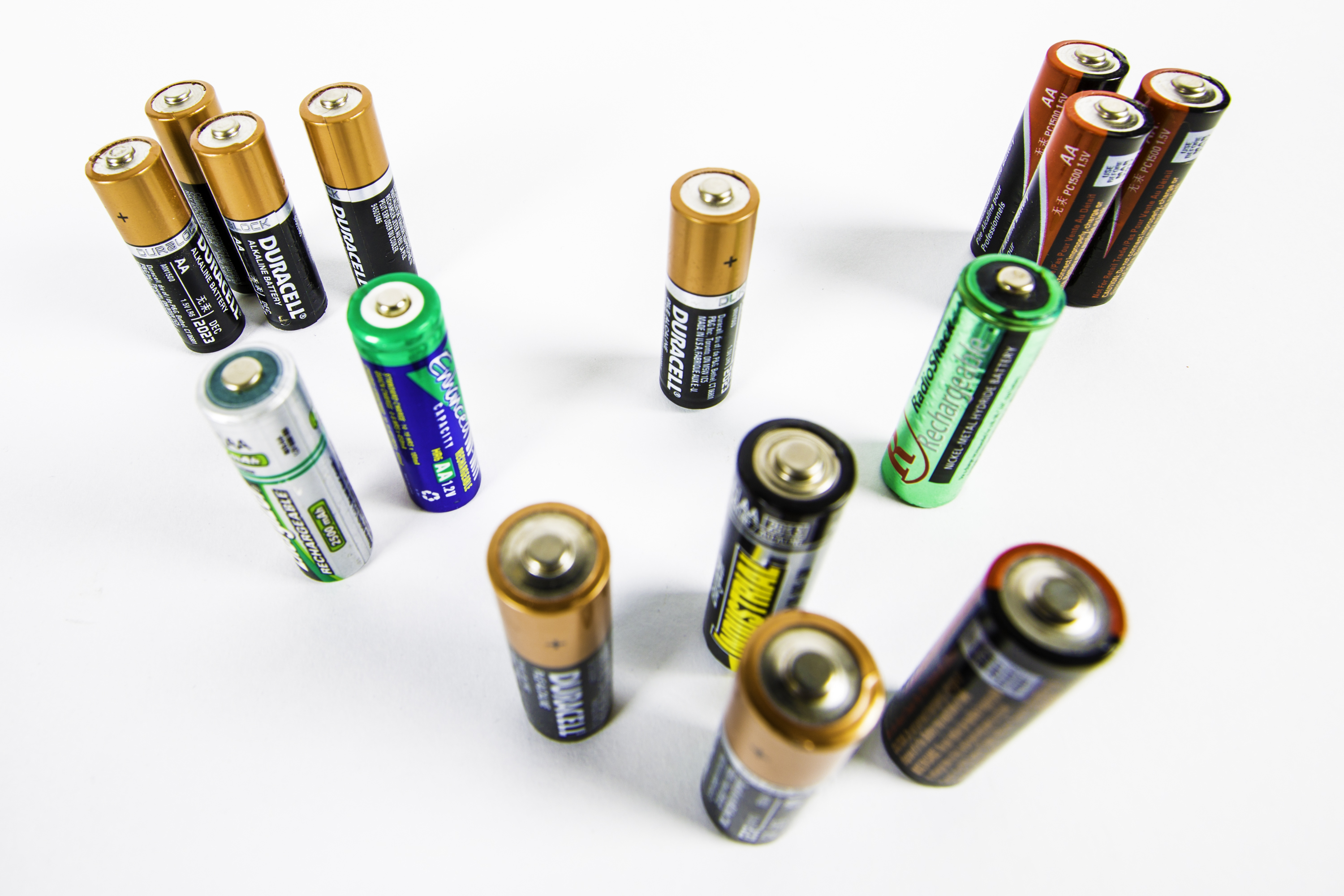
It’s 2014. Why is my battery stuck in the ’90s?

Standard

By Ian Sherr and Shara Tibken

When Apple redesigned the MacBook Pro in 2009, it unveiled a new type of battery that ran a whopping 40 percent longer than the previous model.

The laptop lasted as long as seven hours, almost enough time to watch the epic movie “Lawrence of Arabia” — twice. Phil Schiller, Apple’s marketing chief, called the battery “revolutionary.” But was it really?

Technological leaps over the past two decades have been astounding. Computers have transformed from utilitarian boxes into svelte rectangles of shiny metal and glass that fit in our pockets. Today’s devices are also far more powerful. A new smartwatch has more computing power than the Apollo moon landing spacecraft. Batteries are a different story.

Even though consumer electronics makers, from Apple to Samsung, pour millions of research dollars into eking out more battery life for devices, the technology isn’t expected to advance much in the next few years. But that won’t slow the rising tide of gadgets that rely on batteries.

Why battery tech has stagnated is a topic of debate among researchers, many of whom claim we’re reaching the limits of what science can muster. No matter the reason, consumers will need to find ways to squeeze more juice out of their battery-powered devices.

Two evolutionary trails

To understand what’s going on, consider where battery makers have been, where they are now, and the challenges they face.

Michael Sinkula of Envia Systems, an advanced battery startup in California, crunched the numbers and found the energy stored in a battery in 1995 didn’t double until more than a decade later, in 2007. Since then, a battery’s energy hasn’t even risen by 30 percent. And Envia believes most batteries likely won’t have doubled again even by 2021.

But a typical laptop now runs about 10 hours, up from just four hours when President Barack Obama was sworn in for his first term. How’s that possible?

Tech advancements generally come from two separate forces: a relentless drive to shrink every part’s size and ever improving software to manage it all.

The brains of a computer are its microprocessors, the chips that do the complex math needed for drawing images and for helping Facebook update you about a friend’s birthday. For decades, the industry has been shrinking processor size. As they get smaller, they consume less energy, and battery life gets longer.

Batteries are different. Basically, they’re collections of metals and chemicals. When they’re connected, electricity flows. The problem with chemistry is that making it smaller doesn’t always make it better. Think of it like a drink: if you put less beer in your mug, you just have less beer.

Until now, major battery advances came from using new materials. Consumer electronics batteries began lasting longer when they switched from relying on nickel, a type of metal, to lithium.

John Goodenough, a key scientist in the development of modern batteries, says research now is focused mainly on improving lithium batteries. “The periodic table is limited,” he says, and advancements are becoming increasingly tough.

Even though more people are working on these problems than when Goodenough announced the breakthrough that made modern batteries possible in 1979, scientists are simply running out of new stuff to work with.

A smartphone that lasts a week — instead of a day — requires a radical new technology that hasn’t even made it to the drawing board. “The strategy for the next step isn’t here,” Goodenough believes.

It’s possible that in 250 years, when Capt. James T. Kirk hails the starship Enterprise, his communicator may need a recharge first.

</img=””>

Ex-PlayStation US chief says Candy Crush is fun, Xbox on the right path

Standard

By Ian Sherr

A half-year after Jack Tretton stepped down as head of Sony’s PlayStation division in America, he has time to do something he didn’t have a chance to before: play Candy Crush Saga and Clash of Clans.

To devout PlayStation fans, this could be considered a form of treason.

When he was in his old job, he was laser-focused on Sony products, vetting games for the PlayStation and the company’s Vita handheld video game device. When he wasn’t doing that, he was checking up on what his competitors, including Microsoft and Nintendo, were up to.

Sure, he knew about games made for mobile devices, but he didn’t have the time to actually play them. Now he slings around Apple’s mobile devices, complete with the most addicting and popular titles. “While console is obviously very important and a very big part of the gaming business, it is just a part of the games business,” Trenton said in a wide-ranging interview at his office in Redwood City, Calif. Now he’s playing several mobile games, and experiencing what’s outside the console industry. “I never thought I’d be saying that even a year ago.”

In a spartan office he’s rented, Tretton is relaxed as he talks about getting back into the game, so to speak. He likes advising, and he’s been talking to experts throughout the industry. And he says he’s probably met more people in the months since he left Sony than in the past 20 years.

When he’s not doing that, though, he’s trying to beat the owl, a notoriously hard level of Candy Crush.

Dressed in a purple-shaded shirt, a sport coat and jeans, Tretton weighed in on how he sees things from the outside, the benefits of having a more female perspective in the industry and the health of game makers.

Virtual reality and the silver screen: A match made in heaven

Standard

By Ian Sherr and Shara Tibken

Virtual reality can transport you to distant space to participate in an epic starship battle, or it can drop you in the ocean, with sharks swimming all around.

But its biggest act yet may be showing you a plain old movie.

For the past two years, developers large and small have been toiling away hoping to create the app that becomes synonymous with VR and helps the technology really take off — its “killer app,” as it’s called.

That may have already happened, and it isn’t a game, a panoramic photo application or a calming simulation of a beach scene; it’s movies. As VR technology begins its march to store shelves, manufacturers like Oculus are recognizing the potential for their immersive technologies to deliver the works of Hollywood.

When Oculus first unveiled its headset two years ago, it was pitched as a next-generation video game device.  Companies such as Samsung and Sony have since joined in, funding new development for the burgeoning technology. But to make the device succeed, it needs to appeal to more than just gamers. And that’s where movies comes in.”

“The key to mainstream consumer adoption is going to be enough immersive content on a continual basis that people will be coming back for,” said Jens Christensen, head of virtual reality camera maker Jaunt. Imagine being on an airplane, staring at a movie on the screen of a tablet or on a tinier display installed in the seat in front of you, he said.

Now, consider putting on a virtual reality headset instead. “You suddenly get a 20-foot screen in front of your face–it’s a virtual screen, but it’s huge, and it’s a big difference,” he said.

Meet Ello, the social network that wants to be the anti-Facebook

Standard

By Ian Sherr

Have you ever wanted Facebook to get rid of all those ads? Paul Budnitz went out and did something about it.

Budnitz founded Ello, a social network that launched about six weeks ago and pitches itself as an alternative to the world’s largest social network. Its biggest selling point is the feature it doesn’t have: advertising.

It seems like a joke at first. Budnitz is a 47-year old designer and entrepreneur who splits his time between Vermont and New York, and whose resume includes creating a boutique bicycle shop and a toy company. Ello’s website is sparsely filled, it has few images, and the black text on a white background looks like it’s still a work in progress.

But its dead serious manifesto is becoming a rallying cry across the web: “Your social network is owned by advertisers,” Ello says, adding that every post, friend and link is tracked meticulously by competing social networks, and all of that data is used to help advertisers send you ads. “You are the product that’s bought and sold.”

Ello’s growing popularity, pegged at more than 35,000 people asking to sign up per hour, can be explained in two ways. Ello is something new, and that alone is enough to attract many tech enthusiasts. But Ello is also making waves after a tumultuous summer for Facebook.

In June, social network giant came under fire for manipulating the News Feeds of nearly 700,000 users as part of  a study it conducted along with a couple universities. Not a month later, customers again cried foul when it began forcing customers to download a second application to their mobile devices in order to message with friends. Then, there were fears over the broad access to data the app asked for on their phones.

Ello promises it will be different. Facebook did not respond to requests for comment.

Could Ello unseat Facebook? That seems unlikely, said Kenneth Wisnefski, head of WebiMax, an advertising technology firm. But it taps into  an undercurrent of dissatisfaction among some of its users. For them, Facebook “lost some of its cool factor,” he said, though it is still ingrained in the daily lives of 829 million people.